Flowforma vs Process Street for No-Code Solutions
Your team needs to pick between Flowforma and Process Street, yet both platforms promise no-code workflow automation without clear proof of which system actually fits your compliance needs. The decision hinges on concrete differences in governance controls and AI monitoring, not marketing claims. Many platforms leave teams sorting through vague feature lists that fail to address audit requirements.
By the end of this article you will know which platform delivers workflow orchestration with built-in policy enforcement, how their AI agents compare for risk monitoring, and which pricing structure aligns with your compliance budget and team size.
Quick Verdict: Flowforma vs Process Street for No-Code Solutions
Process Street offers stronger compliance depth and global scalability while Flowforma focuses on Microsoft-centric SharePoint integration. The comparison reveals distinct advantages across five major categories that matter most to enterprise teams making platform decisions.
Process Street leads in compliance with certifications that include SOC 2 Type II, ISO 27001, HIPAA with BAA available, GDPR, CCPA, and AWS CIS compliance. Flowforma operates within Microsoft environments where SharePoint security applies.
Automation depth favors Process Street for teams needing conditional logic, approval workflows, and task automation beyond basic forms. Flowforma provides simpler automation within Microsoft 365 workflows.
Process Street delivers broader integrations across different business systems. Flowforma integrates primarily with Microsoft tools and SharePoint environments.
Pricing tiers differ in structure and accessibility. Process Street serves over 3,000 companies with transparent SaaS pricing suitable for various business sizes. Flowforma pricing aligns with Microsoft licensing models.
Implementation speed shows Process Street achieving 75%+ reduction in setup time. One customer, IMCD UK, reported significant time savings during their rollout. Flowforma implementation depends on existing Microsoft infrastructure complexity.
Process Street documented results include 30% faster documentation and 49k+ employees standardized onboarding across its user base of over 1 million users. The platform maintains 5-minute average response times with 98% customer satisfaction ratings.
At a glance: how Process Street compares to Flowforma, Process Street for No-Code Solutions on the features that matter most.
| Feature | Process Street | Flowforma | Process Street for No-Code Solutions |
|---|---|---|---|
| No-Code Solutions | ✓ | ✓ | ✓ |
What Is Process Street?
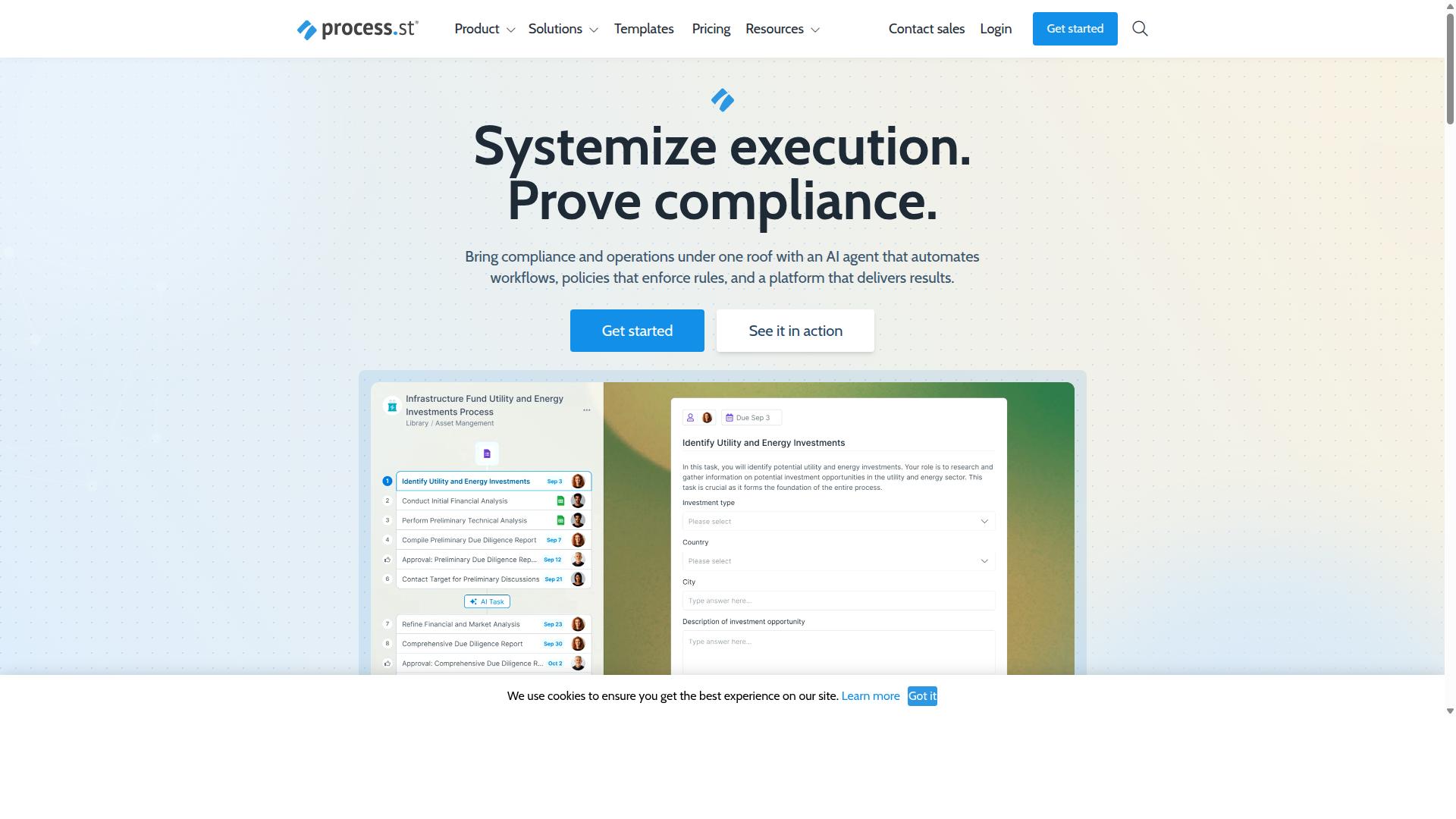
Process Street is a cloud-based compliance operations platform that automates policy enforcement and delivers audit-ready documentation.
The platform serves as a no-code solution for organizations that need to standardize operations while maintaining full regulatory compliance. Its core purpose centers on three key areas that work together to support business needs.
Document management forms the foundation, allowing teams to create, store, and control policies in a centralized system. This approach eliminates scattered files and ensures everyone accesses the most current versions of important documents.
Policy control ensures that established rules and procedures are actually followed across the organization. The system tracks adherence and flags any deviations that could create compliance risks.
Workflow orchestration connects these elements by automating the sequence of tasks required to complete business processes. Teams can define how work moves between different people and systems without writing custom code.
Process Street offers three main products: Docs for document management and policy control, Ops for workflow automation and process orchestration, and Cora, an AI compliance and risk agent. Together these components help organizations standardize processes, prove compliance, and maintain operational consistency across industries.
What Is Flowforma?
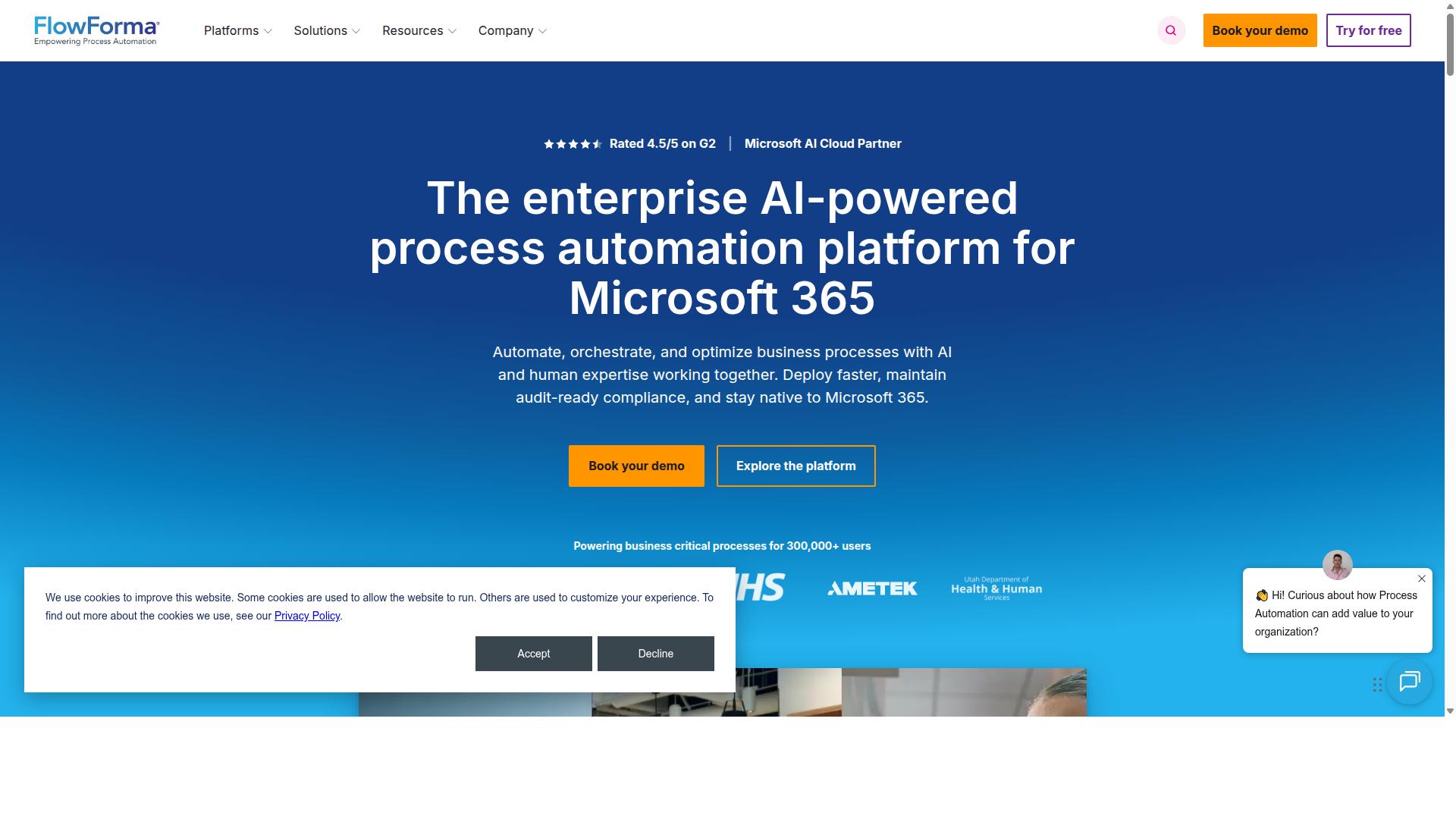
Flowforma is a no-code business process management platform that runs natively inside Microsoft 365 and SharePoint environments. The tool targets organizations already invested in the Microsoft ecosystem. It focuses on digitizing forms and processes without requiring external development resources.
Companies use Flowforma to build approval workflows and automate routine tasks within SharePoint sites. The platform provides a form builder that connects directly to Microsoft data sources. This approach suits teams seeking to extend existing Microsoft investments rather than introduce new standalone systems.
Flowforma positions itself as a business process management solution for enterprise environments. It emphasizes compliance features and integration with Microsoft security frameworks. Organizations can configure user permissions and maintain audit trails through familiar SharePoint interfaces.
The platform supports digital transformation initiatives by converting paper-based processes into digital flows. Teams can create templates for common business activities like expense approvals and document reviews. This Microsoft-centric approach reduces the need for separate infrastructure while maintaining data within existing tenant boundaries.
What Is Process Street for No-Code Solutions?
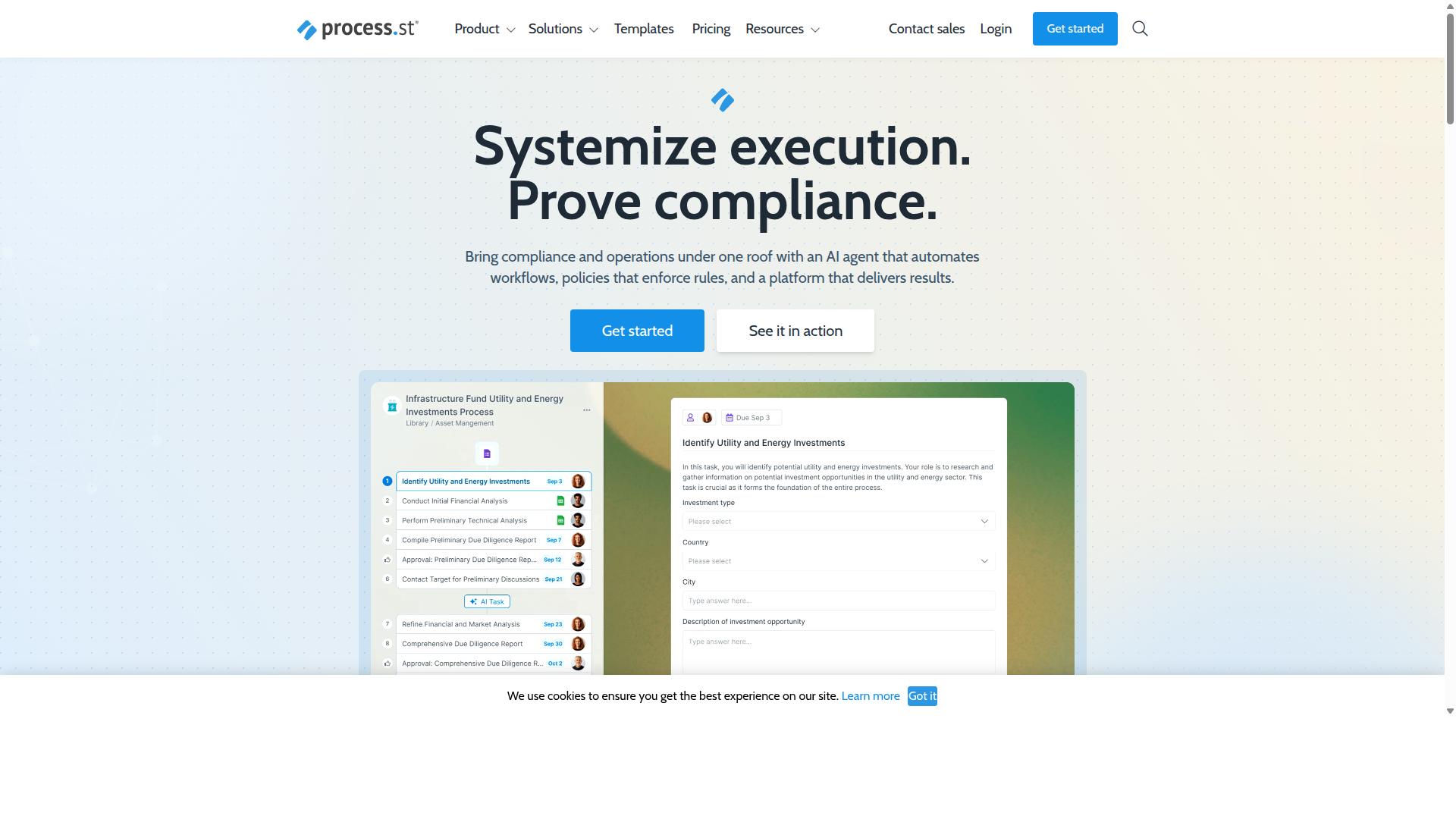
Process Street provides a no-code environment where teams can design, deploy, and monitor workflows without writing code. The platform combines a drag-and-drop workflow builder with a template library. Non-technical users gain the ability to automate processes while maintaining governance.
The builder lets users arrange steps, add conditional logic, and assign tasks through simple visual controls. Teams connect these workflows to external tools through integrations with Zapier, Microsoft Power Automate, Tray.io, Make, and Public API access. This flexibility supports a variety of business process management needs.
Process Street includes Ops for workflow automation and process orchestration. Policies convert into AI-powered workflows that keep operations consistent across departments. Users track performance through analytics features that show where bottlenecks occur.
Docs provides document management and policy control with full governance for ISO 9001, SOC 2, SOX, and FDA requirements. Audit trails capture every change automatically. Role-based access ensures team members see only the information they need.
Cora serves as an AI compliance agent that monitors regulations, automates work, and flags risks 24/7. This adds another layer of oversight to automated processes without requiring manual checks. Organizations maintain standards while the system handles routine compliance tasks.
Process Street supports cloud deployment and mobile access so teams can work from any location. Process AI adds intelligence to existing workflows. The combination of these features creates a complete no-code platform for enterprise software needs.
Features Compared
Workflow depth, compliance controls, and AI monitoring differ significantly between the two platforms.
Digital transformation projects succeed when teams select tools that match their operational complexity and regulatory requirements. Process Street and Flowforma address these needs through distinct approaches that affect implementation timelines and ongoing governance.
Three specific areas determine whether a no-code platform scales with enterprise demands. Workflow automation establishes how processes execute across teams. Compliance controls define audit readiness. AI monitoring tracks system health and regulatory adherence.
Each area presents different trade-offs depending on industry requirements and technical infrastructure choices. Organizations must evaluate these differences against their existing systems and growth projections.
Workflow Automation & Process Orchestration
Process Street orchestrates multi-step processes through AI-powered conditional logic and dynamic role assignment.
The platform converts policies into AI-powered workflows that execute across multiple departments with automatic step routing and conditional branching. Dynamic role assignment ensures the right team members receive tasks based on process requirements and organizational structure.
Process Street integrates with Zapier, Microsoft Power Automate, Tray.io, Make, and public API access to connect existing business systems. These connections allow data to flow between platforms without manual intervention or custom development work.
Flowforma operates within the Microsoft 365 environment and leverages SharePoint infrastructure for process execution. The platform focuses on form-based workflows that align with existing Microsoft security and permissions models.
Process Street's approach supports complex approval workflows that span multiple systems and stakeholder groups. The platform maintains process consistency while allowing customization for specific business requirements.
Compliance & Governance Controls
Audit-ready trails and granular permissions are essential for regulated industries.
Process Street provides ISO 9001, SOC 2, SOX, and FDA support through its documentation and policy control features. The platform maintains SOC 2 Type II and ISO 27001 certifications that address enterprise security requirements.
HIPAA compliance comes with BAA availability upon request for healthcare organizations. GDPR and CCPA compliance support data protection requirements across different regulatory jurisdictions.
Flowforma relies on SharePoint's security model and inherits permissions from the Microsoft 365 environment. This approach works well for organizations already standardized on Microsoft infrastructure.
Process Street's certifications reduce the compliance burden for industries with strict regulatory oversight. The platform's governance features support documentation requirements that many enterprises face during audits.
AI-Powered Monitoring
Real-time monitoring surfaces bottlenecks and delivers instant compliance alerts.
Process Street's Cora AI compliance agent monitors regulations, automates work, and flags risks continuously. The system tracks workflow health and generates audit evidence without requiring manual oversight.
Process AI capabilities within the platform analyze process performance and identify areas for improvement. Analytics features provide visibility into operational metrics that affect compliance and efficiency.
Flowforma provides analytics capabilities within the Microsoft 365 environment. The platform's reporting focuses on process execution data available through SharePoint infrastructure.
Process Street's AI monitoring supports organizations that need continuous oversight of their digital processes. The platform's approach reduces the manual effort required to maintain compliance standards across complex workflows.
Pricing Compared
Pricing structures range from startup-friendly tiers to enterprise agreements with usage-based automation limits.
Process Street offers three distinct plans that match different organizational scales. The Startup plan provides unlimited workflows and tasks for smaller teams, capped at 5 users and 10 guests. This option includes 10 automation apps along with 100 automation actions per month.
Data storage reaches 5,000 records on the Startup tier. Organizations gain 50 monthly Public API calls for basic integrations. A 14-day free trial on the Pro plan allows testing without requiring payment details upfront.
The Pro plan scales capabilities for growing teams. It maintains unlimited workflows while increasing data storage to 10,000 records. Custom user counts and automation action limits provide flexibility as needs evolve.
Flowforma typically follows a usage-based pricing model that scales with form submissions and workflow volume. Exact costs depend on deployment size and required features, making direct comparison dependent on specific organizational requirements.
The Enterprise plan delivers custom data storage limits alongside unlimited Public API access. Organizations receive dedicated success management and priority support channels. Fully-managed workflow services and process consulting provide additional value for large-scale deployments.
Bulk document import and personalized team training distinguish the Enterprise offering. Custom integrations address specialized compliance and security requirements across different industries.
Process Street's tiered approach provides clearer cost predictability than Flowforma's variable pricing structure. Organizations can match their automation needs directly to specific plans without complex usage calculations.
Who Should Choose Process Street
Teams in regulated industries needing global scalability and audit readiness gravitate toward Process Street. These organizations often face strict reporting requirements that demand consistent process control across multiple locations.
Financial services companies rely on Process Street to manage compliance workflows and maintain documented procedures. Their operations teams use the platform to standardize approval workflows while ensuring every step meets regulatory standards.
Healthcare organizations turn to Process Street for quality tracking and document control processes. These requirements help maintain accreditation standards and manage patient safety protocols across different facilities.
Manufacturing businesses benefit from Process Street's ability to handle ISO compliance and quality management workflows. Production teams can track procedures that affect product quality while maintaining detailed records for audits.
Real estate and property management firms use Process Street for client onboarding and tenant management processes. These workflows often involve multiple approval stages and require consistent documentation throughout each transaction.
Operations teams across professional services companies use Process Street to manage employee onboarding and custom workflows. Human resources departments appreciate the platform's ability to maintain consistent procedures while scaling across different departments and locations.
Capital markets and technology companies select Process Street when they need audit trail capabilities and role-based access controls. These features help IT and security teams maintain oversight while allowing different user groups appropriate system access.
The platform's template library contains pre-built workflows for common business processes. Organizations can adapt these templates rather than building processes from scratch, which reduces implementation time and ensures proven procedures guide daily operations.
Who Should Choose Flowforma
Organizations already invested in Microsoft 365 and SharePoint often prefer a native no-code BPM tool. This approach helps teams avoid additional platform conflicts and makes the most of existing infrastructure.
Microsoft-centric environments typically need solutions that connect directly to their current tools. Flowforma fits this model by integrating with tools already in place across many enterprises.
Teams working within strict regulatory frameworks may also benefit from this alignment. Built-in controls and permissions can align with compliance requirements common in enterprise software.
Companies already using Microsoft products for document management and collaboration often see advantages in staying within that ecosystem. This reduces the need to introduce new vendors and lowers training overhead for staff.
Departments focused on internal process mapping and approval workflows may find this approach sufficient. The native integration means less friction when moving data between systems.
However, organizations with complex or evolving needs may eventually require more flexibility. In such cases, a broader no-code platform might offer easier scaling and greater freedom for future changes.
Research suggests that companies prioritizing ecosystem compatibility over specialized BPM features often choose this route. The decision usually comes down to how tightly teams want to stay within Microsoft tools.
Who Should Choose Process Street for No-Code Solutions
Teams that want to replace spreadsheets and emails with governed, no-code workflows select Process Street. Groups that need documented approval workflows and task automation benefit from this platform.
Non-technical users can build and manage workflows without coding skills. The platform supports business process management through simple interfaces that replace complex spreadsheet systems.
IMCD UK reported 30% faster documentation and 75% reduction in setup time when adopting Process Street. These results show how non-technical teams achieve measurable gains during digital transformation projects.
Companies with 49k+ employees use Process Street to standardize onboarding across departments. The platform scales from small teams to enterprise environments while maintaining consistent process quality.
Compliance requirements matter for many organizations. Process Street holds SOC 2 Type II certification, ISO 27001 certification, and provides HIPAA compliance with BAA available upon request. GDPR and CCPA compliance support data handling across different regions.
Data security remains a priority. The platform never uses customer data to train AI models. AWS CIS compliance adds another layer of security standards for cloud deployment.
Support response time averages 5 minutes with a 98% customer satisfaction rating. This level of service helps teams resolve issues quickly during implementation.
Teams already using AWS infrastructure can find Process Street on the AWS Marketplace. This availability simplifies procurement for organizations with existing cloud vendor relationships.
Final Verdict
Process Street leads for compliance-heavy, globally distributed teams, while Flowforma suits Microsoft-centric environments. The decision comes down to three decisive differentiators that separate these no-code platforms.
Compliance certifications set the foundation. Process Street maintains enterprise-grade security standards that support audit requirements across distributed operations. Organizations handling sensitive data benefit from documented security measures that align with regulatory needs.
Automation depth determines how far teams can extend their workflows. Process Street offers conditional logic and approval workflows that scale across departments. Flowforma's strength lies in Microsoft ecosystem integration, which may limit flexibility for non-Microsoft environments.
Onboarding speed affects time-to-value for new implementations. Process Street provides support via email and chat with a 5-minute average response time. This responsive approach helps teams get started quickly without extended implementation cycles.
Teams evaluating no-code solutions should assess their specific requirements around compliance, existing technology stack, and support expectations. Contact Process Street sales for a tailored demo that addresses your workflow automation needs.