Email Automation Software Pricing Guide: What Should You Pay?
Your email automation bill renews next month, and you still are not sure what you are paying for. Most platforms charge by contacts, sends, and seats, so the same plan can cost two very different amounts.
This guide breaks down what actually drives email automation pricing, the typical ranges by plan type, and the hidden costs that inflate your bill. You will also see how Tasks.Bot prices its full access plan and walk away knowing what you should realistically pay.
What Is Tasks.Bot?
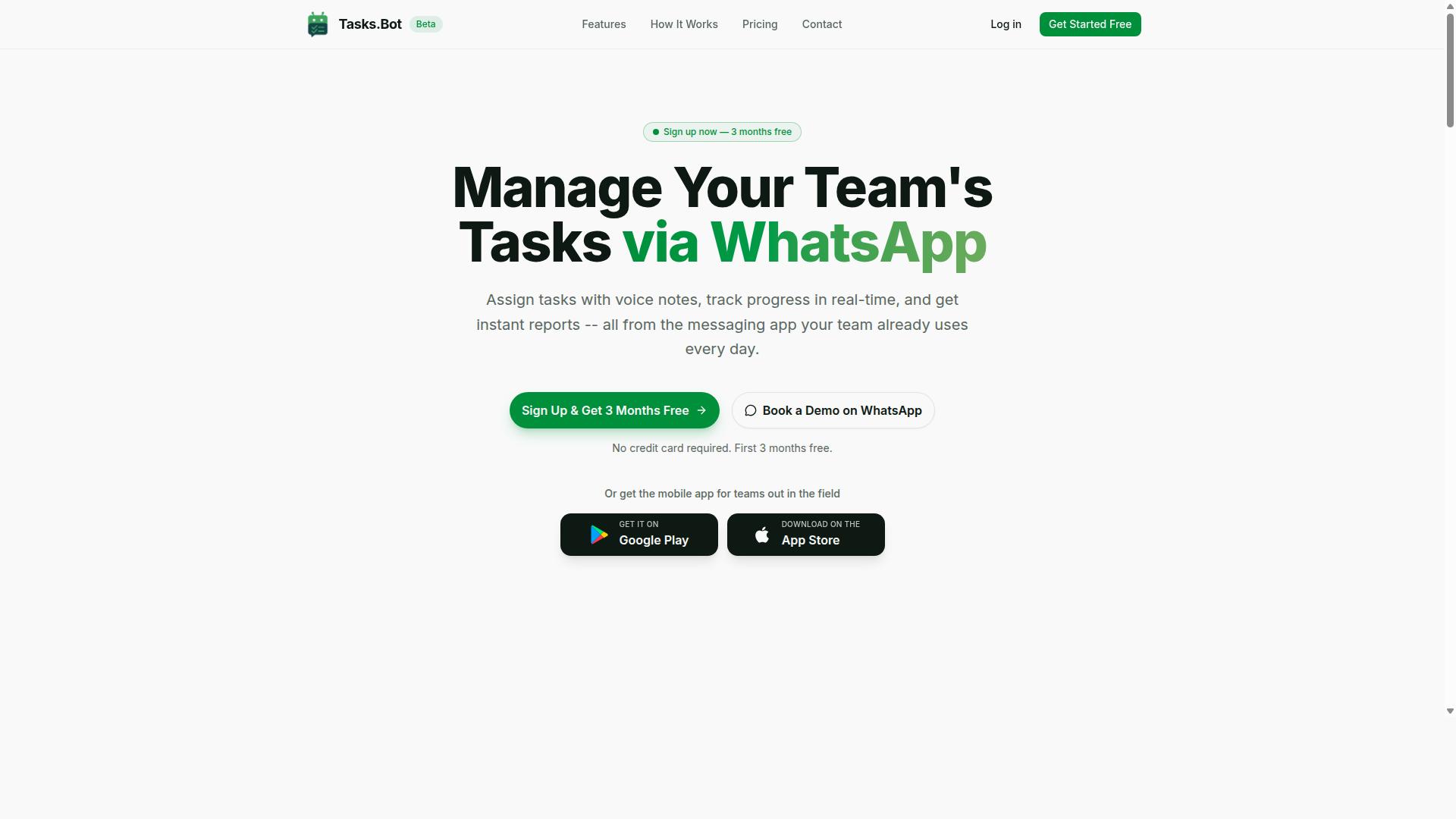
Tasks.Bot is a task management platform that operates entirely within WhatsApp, allowing teams to assign tasks, track progress, and receive reports without leaving the messaging app.
The key advantage is simplicity. Team members do not need to install new software or create separate accounts, which removes a common barrier to adoption. A mobile app for field teams is also available.
The service is currently in beta and offers a free trial period, giving teams a low-risk way to see how it fits their workflow.
Who Tasks.Bot Serves and How It Works
Tasks.Bot is designed for teams that already use WhatsApp as their primary communication tool, especially those with field staff who need to manage tasks, track attendance, and log hours for payroll.
Tasks are created through voice notes or natural language, then automatically assigned and tracked with smart reminders. This keeps coordination inside a channel the team already checks daily.
For operations that need accountability, the platform offers face-verified attendance and payroll-ready hours, so shift data flows straight into payroll without manual reconciliation.
The site notes that hundreds of teams already use the service, and it suits organizations of all sizes that rely on WhatsApp for day-to-day communication.
What Should You Pay for Email Automation Software?
When budgeting for email automation software, the price you pay depends on several factors, including the number of contacts, email volume, and user seats. Two platforms with similar feature lists can carry very different subscription costs once those variables change.
Most vendors use tiered pricing rather than one flat number, so your monthly fee rises as your list and sending needs grow. Add-ons, setup fees, and annual billing terms can shift the total further.
The sections below break down each cost driver, then map typical price ranges to the main plan types.
The Real Cost Drivers: Contacts, Sends, and Seats
The three primary cost drivers for email automation software are the size of your contact list, the number of emails you send each month, and the number of user seats you need. Understanding how each one is billed helps you predict your invoice before you commit.
Contacts. Most platforms charge on per-contact pricing, meaning you pay for every subscriber stored in your account, whether or not you email them. Tiers commonly start around 500 contacts, then step up to 1,000, 2,500, 5,000, and beyond. A small list might sit in a $10 to $50 per month bracket, while a list of 50,000 contacts can push a basic plan into the hundreds.
Sends. Some vendors cap your monthly email volume instead of, or alongside, your contact count. Exceed that cap and you trigger overage charges, often billed per thousand extra emails. This matters for high-frequency senders running drip campaigns, triggered emails, or transactional emails.
Seats. Seat-based pricing, also called user-based pricing, charges for each person who logs in. A solo operator may pay nothing extra, while a team of five can add a meaningful surcharge. Some plans include a set number of seats and bill the rest as an add-on.
Watch for hidden fees too. Setup fees, onboarding costs, and premium support tiers are frequently quoted separately from the headline rate.
Typical Price Ranges by Plan Type
Email automation software typically comes in four plan types: freemium, entry-level, mid-tier, and enterprise, each with distinct price ranges and features. Treat the figures below as general market ranges rather than fixed rates, since vendors adjust them often.
| Plan Type | Typical Monthly Cost | What You Usually Get |
|---|---|---|
| Freemium | $0 | Free up to a contact limit such as 500, basic automation, limited sends |
| Entry-level | $10 to $30 | Small lists, simple automation workflows, email support |
| Mid-tier | $50 to $200 | Larger lists, advanced workflows, CRM integration, A/B testing |
| Enterprise | Custom quote, often $500+ | Dedicated support, API access, higher deliverability controls |
The freemium model suits people testing a tool before spending. A free trial differs slightly: it grants full features for a short window rather than a permanent free tier. Both are useful for checking whether the automation builder fits how you work.
The entry-level tier covers a solo sender or a small business with a modest list. You get the core automation engine, but expect limits on segmentation, reporting depth, and sending volume.
A mid-tier plan is where marketing automation gets serious. Advanced workflows, CRM integration, and richer analytics usually appear here, which is why the jump from entry-level can feel steep.
Enterprise pricing is quoted per customer and reflects volume, compliance needs, and support expectations. API access and dedicated account handling are common inclusions at this level.
One easy way to cut your subscription cost is annual billing. Paying for twelve months upfront commonly earns a discount in the range of 20 percent, though the exact figure varies by vendor. Confirm whether the discount applies to add-ons and overages as well as the base fee, since that detail changes the real savings.
Hidden Costs That Inflate Your Bill
Beyond the advertised monthly fee, email automation software often comes with hidden costs that can significantly inflate your total bill. The headline price on a pricing page rarely tells the full story. That is why a smart pricing guide always points you toward the total cost of ownership, not just the sticker price.
Most platforms structure their plans around limits. When you cross those limits, the meter keeps running. Overage charges are the most common culprit, and they usually appear in two forms: extra contacts and extra sends.
- Contact overages: many tools charge roughly $10 per 1,000 additional contacts once you exceed your plan's list size
- Send overages: exceeding your monthly email volume can trigger per-email pricing or block your campaigns until you upgrade
- Storage or media fees: some platforms bill separately for hosting images, files, or templates above a set threshold
These charges are easy to miss because they only show up after a growth spurt. A viral signup form or a busy sales month can push you into the next bracket without warning.
Feature add-ons are the second layer of hidden fees. Core automation workflows, drip campaigns, and triggered emails may be included in your plan, but the tools that make them powerful often are not.
- CRM integration: connecting your customer database can carry a monthly add-on fee
- API access: developers and technical teams frequently pay extra for programmatic control
- Deliverability tools: dedicated IPs, inbox placement monitoring, and authentication support sometimes sit behind a paywall
- Premium support: priority response times or phone access are commonly sold as a separate tier
Setup and onboarding costs deserve equal attention. Some vendors charge a one-time implementation fee to migrate your lists, configure automation workflows, or train your team. Others fold onboarding into a recurring service charge that quietly raises your effective subscription cost every month. For enterprise pricing, a custom quote may bundle these fees in ways that are hard to compare against a standard paid plan.
Seat-based pricing adds another variable. If your plan charges per user, every new marketer, sales rep, or contractor who needs dashboard access increases the bill. A tool that looks affordable for two seats can become expensive for ten.
The fix is straightforward: read the fine print before you commit. Check the pricing page for overage rates, add-on pricing, and setup fee disclosures. Ask for a written breakdown of what triggers extra charges. Then calculate your realistic total cost of ownership based on your actual contact list size and email volume, not the numbers in the marketing example. A free trial or freemium model can help you test the platform's real limits before you upgrade to a paid plan.
How Tasks.Bot Prices Its Full Access Plan
Tasks.Bot offers a straightforward 'Full Access' plan that includes all features, with pricing available in both Indian Rupees and US Dollars. Instead of juggling multiple tiers, the product keeps its structure simple: one plan, everything included.
That approach stands out in a pricing guide for email automation software, where tiered pricing is the norm and buyers often have to guess which tier unlocks a needed feature. With Tasks.Bot, there is no entry-level tier to outgrow and no mid-tier plan to compare against.
Pricing is charged per member, making it a seat-based pricing model rather than one tied to contact list size or email volume. New users also get 3 months free, with no credit card required, and can cancel anytime. The site shows a 'Select currency' option for Indian Rupee and US Dollar, so the currency you see should be verified before you commit.
Monthly vs Annual: ₹200/Member vs ₹1,200/Year
Tasks.Bot's Full Access plan costs ₹200 per member per month on the monthly plan, or ₹1,200 per member per year on the annual plan, which equates to ₹100 per month. In USD terms, that works out to roughly $2.50 per month or $15 per year, depending on the currency you select.
The annual option delivers a 50% savings, amounting to ₹1,200 saved per year for every member. For a small team, that difference compounds quickly. A five-member team on monthly billing pays ₹12,000 over a year, while the annual plan brings the same team to ₹6,000.
- Monthly plan: ₹200 per member, per month
- Annual plan: ₹1,200 per member, per year
- Annual savings: 50%, or ₹1,200 per member each year
- USD equivalent: about $2.50 per month or $15 per year
Every feature is included in both plans, so choosing annual does not unlock anything extra. It simply lowers the effective monthly fee. There are no hidden fees, overage charges, or add-on pricing to track, which keeps the subscription cost predictable from month to month.
That flat-rate plan structure is worth noting in any pricing guide. Many platforms tie cost to contact list size, email volume, or sending limits, so the bill moves as your list grows. Tasks.Bot's per-member model keeps the number steady regardless of how many automation workflows, drip campaigns, or triggered emails you run.
For teams planning ahead, the annual plan is the clear value pick. The monthly option remains useful for testing fit, especially alongside the 3 months free offer. Either way, the math is simple enough to check in a minute, and no credit card is required to begin.
Why Tasks.Bot Offers Strong Value for WhatsApp-First Teams
Tasks.Bot delivers exceptional value for teams that already use WhatsApp, by integrating task management directly into the app they use daily. Instead of asking people to learn a new platform, the software meets them where they already are. That single design decision changes how much a tool actually costs a business once you count the time and training it takes to get everyone on board.
Most email automation and task management platforms charge on dimensions that grow whether or not your team grows. Per-contact pricing, per-email pricing, and usage-based tiers mean your subscription cost rises as your list or sending volume expands. Tasks.Bot takes a different approach. Its pricing is organized around members, which makes the monthly fee simple and predictable rather than tied to contact list size or email volume.
That distinction matters when you build a budget. A flat, member-based structure is easier to forecast than a bill that shifts every time your audience grows. There are no surprise overage charges tied to sending limits, and no need to guess how many automation workflows will push you into the next tier.
The value proposition rests on removing friction, and the verified features back that up:
- No installation or new accounts. The platform operates entirely within WhatsApp, so team members do not need to install anything or create new accounts.
- AI-powered task creation. Tasks.Bot uses AI to understand natural language and voice notes, so assigning work can happen in a message rather than a form.
- Face-verified attendance and live GPS tracking for field staff, useful for teams that manage people away from a desk.
- Enterprise-grade encryption. Conversations and task data are never shared or used for training.
- A 3-month free trial with no credit card required, which lets a team evaluate fit before committing budget.
Compare that with the onboarding cost of a typical email automation tool. New software often means setup time, migration of contact lists, and training sessions, all of which carry a real cost even when the license itself looks cheap. Because Tasks.Bot lives inside an app your team already knows, much of that adoption overhead disappears.
For WhatsApp-first teams, the practical result is straightforward. You get task creation, attendance verification, and reporting without adding another login to the stack. The member-based model keeps the subscription cost steady, and the free trial removes the risk of paying for something that does not fit. That combination is what makes Tasks.Bot a strong value choice rather than just another line item.
Who Should Use Tasks.Bot
Tasks.Bot is ideal for teams that rely on WhatsApp for communication, particularly those with field staff who need to manage tasks, track attendance, and log hours. If your team already lives in WhatsApp chats, this tool meets you where the work actually happens instead of asking everyone to learn a new platform.
That focus makes it a natural fit for teams of any size, from a small crew of a few people to larger operations spread across multiple sites. The common thread is simple: WhatsApp is the primary channel, and the day-to-day work involves coordinating people who are not sitting at a desk.
Industries with mobile or distributed workers tend to benefit most. These include:
- Construction crews moving between job sites
- Delivery and logistics teams coordinating routes and drop-offs
- Sales teams working in the field rather than from an office
- Field services such as maintenance, repair, and inspections
What these industries share is a workforce that is rarely in front of a computer. Tasks, attendance, and hours all need to be captured in the moment, and a chat-based workflow removes the friction of switching between apps.
One of the biggest practical advantages is zero adoption cost. Because Tasks.Bot works through WhatsApp, there is no new app to install and no training program to run. Team members use a tool they already know, which shortens the path from setup to daily use.
This matters for managers too. Onboarding a field team onto unfamiliar software often stalls, but a WhatsApp-based approach sidesteps that resistance entirely. The habit is already there.
Tasks.Bot is not a fit for every organization. If your team works primarily through email, a desktop project management suite, or a dedicated internal platform, the WhatsApp-first model will feel like a mismatch. The value shows up when WhatsApp is already the default way your people talk to each other.
It is also worth noting that the service is not new or untested. According to the brand, hundreds of teams already use Tasks.Bot, which suggests the approach has found real traction among field-based and remote operations.
If you are weighing whether to pay for email automation software, this is a useful contrast. Email tools solve inbox and campaign problems; Tasks.Bot solves coordination problems for teams that communicate over WhatsApp. They serve different needs, and knowing which one your team actually has is the first step toward spending your budget well.
Final Verdict: What You Should Actually Pay
For most small to mid-sized teams using WhatsApp, Tasks.Bot's Full Access plan at ₹200 per member per month or ₹1,200 per year offers a cost-effective solution compared to traditional email automation software.
That conclusion follows directly from everything this pricing guide has covered. Email automation platforms tend to stack tiered pricing, seat-based charges, per-contact limits, and overage fees on top of one another. Tasks.Bot takes the opposite route: one flat, all-inclusive rate per member, with no setup fee and no hidden charges layered on top.
If your team already runs its daily work through WhatsApp, the math is simple. A five-person team pays ₹1,000 per month or ₹6,000 per year on the Full Access plan, and everyone gets the same access. There is no need to guess at contact list size, email volume, or which automation features sit behind a higher tier.
Traditional email automation software can still make sense for organizations that live entirely inside email. But for WhatsApp-first teams, paying enterprise-level rates for features built around a different channel rarely delivers proportional value.
Tasks.Bot is currently in beta, which is worth noting for a practical reason. Early adopters often receive closer attention from the team while the product is still being shaped, so questions and feedback tend to get looked at quickly.
To talk through whether the Full Access plan fits your team, reach out directly:
- Phone: +91 97143 42522
- Email: [email protected]
- Or book a demo on WhatsApp for the fastest response
The verdict, then, is straightforward. If you want predictable costs and your team works on WhatsApp, Tasks.Bot's Full Access plan is the clear choice. If you are weighing options, a quick conversation on WhatsApp will tell you more than any pricing page.
Frequently Asked Questions
How much does Tasks.Bot cost compared to other email automation software?
Tasks.Bot's Full Access plan includes all features and is priced at ₹200 per member per month, or ₹1,200 per year per member on the annual plan - a 50% saving. Pricing is available in both Indian Rupees and US Dollars. Since pricing varies widely across email automation tools, compare any vendor's cost against the value you actually need rather than headline numbers alone.
Does Tasks.Bot offer a free trial or a free plan?
Tasks.Bot does not list a free plan; instead, it offers a single 'Full Access' plan with all features included, and the service is currently in beta. You can see it in action before committing by using the 'Book a Demo on WhatsApp' option on the website. The site also mentions a refund policy in its footer, so it's worth reviewing those terms before you subscribe.
What features do I get for the price?
Tasks.Bot's Full Access plan includes everything: task management via WhatsApp, voice note task creation, automatic task assignment, smart deadline reminders, approvals and automations, instant reports, tasks on a map, and live day tracking. It also offers face-verified attendance and a mobile app for field teams. Because it runs entirely within WhatsApp, team members don't need to install anything or create new accounts.
Is per-member pricing or flat pricing better for my team?
It depends on your team size and how many people genuinely need access. Tasks.Bot uses straightforward per-member pricing - ₹200 per member per month, or ₹1,200 per year per member - so your cost scales predictably as your team grows. If only part of your team needs task management, per-member pricing usually keeps costs lower than a flat fee for unlimited seats.
Do I need to pay extra for onboarding, support, or add-ons?
Tasks.Bot's Full Access plan includes all features, so there are no feature tiers to upgrade between. For specifics on onboarding, support, or anything beyond the published plan, contact the team directly at [email protected] or +91 97143 42522. They can confirm exactly what's covered before you pay.
How do I choose the right email automation software for my budget?
Start by listing the features your team will actually use daily, then check whether a vendor bundles them or charges per add-on. Tasks.Bot keeps this simple with one Full Access plan covering all features, priced per member, which makes budgeting easy to predict. If your team already communicates on WhatsApp, a tool that works inside it - like Tasks.Bot - can also save the hidden cost of adopting and training on a separate platform.